Table Of Content
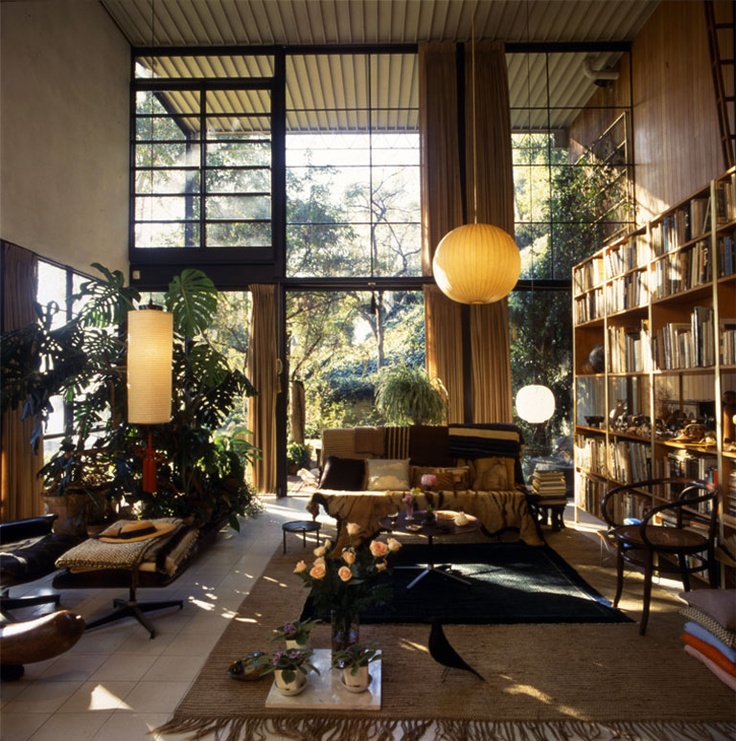
The problem was that to respect the wishes of Charles and Ray Eames, the house could not be sealed off like typical museums. The idea was for living things like plants and flowers to still be very evident in the house and for visitors to use the house as Charles and Ray intended it to be used. This meant that live plants had to be included and windows and doors had to be in working condition. The bedroom has a sliding wood panel in the middle, that when closed, clearly divides the Eames House bedroom into a separate master bedroom and a guest bedroom when needed. The Eames House bedroom overlooks the double-volume living area and acts as a mezzanine level.
The Iconic Eames House Tour: 5 Tips + Full Guide (
In 2004, Charles's daughter, Lucia Eames, created a not-for-profit organization called the Eames Foundation to preserve and protect the Eames House and to provide educational experiences that celebrate the creative legacy of Charles and Ray Eames.
Quotes by Charles Eames
Charles And Ray Eames Made Life Better By Design; Their Home Was No Exception - NPR
Charles And Ray Eames Made Life Better By Design; Their Home Was No Exception.
Posted: Fri, 02 Aug 2019 07:00:00 GMT [source]
In fact, it has changed little from when Charles was also alive, and even from 1958 when the team consolidated their creative work at the Eames Office located in Venice, California. "All of these things have kind of signaled either a certain kind of middle-classness, white liberal Democrat, to just be frank, or this HENRY — high earner, not rich yet — lifestyle," Guy said. None of the men I talked to could pinpoint exactly why they wanted the chair — it's aspirational, it's nice, it's comfortable, though not as comfortable as the couch or a La-Z-Boy. The Eames chair seems eco-friendly, too — they're not going to be tossing it out in two years. Many of them had gotten the chairs during or after the pandemic, at a moment when a lot of people had money to spend and nowhere to spend it and were spending an extra-large amount of time at home. He compares it to a Rolex or a Porsche, where some people want it because it looks cool or is a status symbol, while others are "purists and absolute nut jobs" who obsess over the details.
The Design of the House
The design used pre-fabricated materials ordered from industrial and commercial catalogs. Materials were ordered for the Bridge House and the design was published in the December 1945 issue of the magazine, but due to a war-driven shortage, the steel did not arrive until late 1948. By then, according to Ray, she and Charles had “fallen in love with the meadow.” The nature of the site, and the Eameses themselves, yearned for a different solution.
Iconic House: The Eames House, Case Study House 8 - Architectural Digest India
Iconic House: The Eames House, Case Study House 8.
Posted: Fri, 27 Apr 2018 07:00:00 GMT [source]
There is, however, a corrugated glass screen that conceals the utility area behind the kitchen, where food was prepared in copious amounts by Ray on a regular basis. This was because they loved hosting others but also believed that the mess of daily life should be hidden in some way from your guests to make their experience as pleasurable as possible. They did this by merging the two buildings while still making use of the same amounts of materials, with the addition of a single steel segment.

Today, the Eames House functions as a house museum, preserving the everyday workings of the husband-and-wife design team. Founded in 2004 by Charles’s daughter, Lucia Eames, the Eames Foundation makes the residence accessible to visitors, students, and conservators alike. The house is situated on a three-acre site on top of an 150-foot cliff that overlooks the Pacific Ocean. The site is a flat parcel on otherwise steep land that creates a retaining wall to the west.
The Foundation
The Eames House, Case Study House 8, was one of roughly two-dozen homes built as part of The Case Study House Program. John Entenza, the publisher of Arts & Architecture magazine, spearheaded the program in the mid-1940s, and it continued through the early 1960s. In a challenge to the architectural community, the magazine announced that it would be the client for a series of homes designed to express man's life in the modern world. These houses were to be built and furnished using materials and techniques derived from the experiences of the Second World War.
View all galleries in Historic parks and gardens
The Eameses moved in Christmas of that year, and remained in the house until their death. Their 2-part home was originally going to sit across the meadow like a bridge, but after the couple came to love the space, they realized they wanted their home to be more integrated with the landscape, instead of dominating it. I feel so lucky I could get reservations for this tour and participate in this experience. One of the craziest facts I learned on this trip is that Ray and Charles Eames purchased this site before they designed any of their iconic pieces or were famous. It’s hard to imagine a time when designers could afford to buy oceanfront property near Santa Monica so early in their careers. As soon as you check in and walk through the gate, you are hit by what a unique and inspirational place Charles and Ray Eames created.
Design and history
The parts were ordered and the Bridge House design was published in the December 1945 issue of the magazine, but due to a war-driven shortage, the steel did not arrive until late 1948. The Eames House doesn’t just make a statement from the outside; the interiors are equally compelling. The house is a melting pot of the Eameses’ diverse interests and design sensibilities—featuring Isamu Noguchi lamps, Thonet chairs, Native American baskets, and more. The living spaces are meticulously designed to serve multiple functions—a living room that transforms into a workspace, alcoves that turn into intimate conversation spots, and hallways lined with functional storage closets. It was constructed in 1949 by husband-and-wife design pioneers Charles and Ray Eames, to serve as their home and studio. The house is a living laboratory of the Eameses’ ideas and creativity, illuminating their approaches to life and work in a multi-layered, visceral manner.
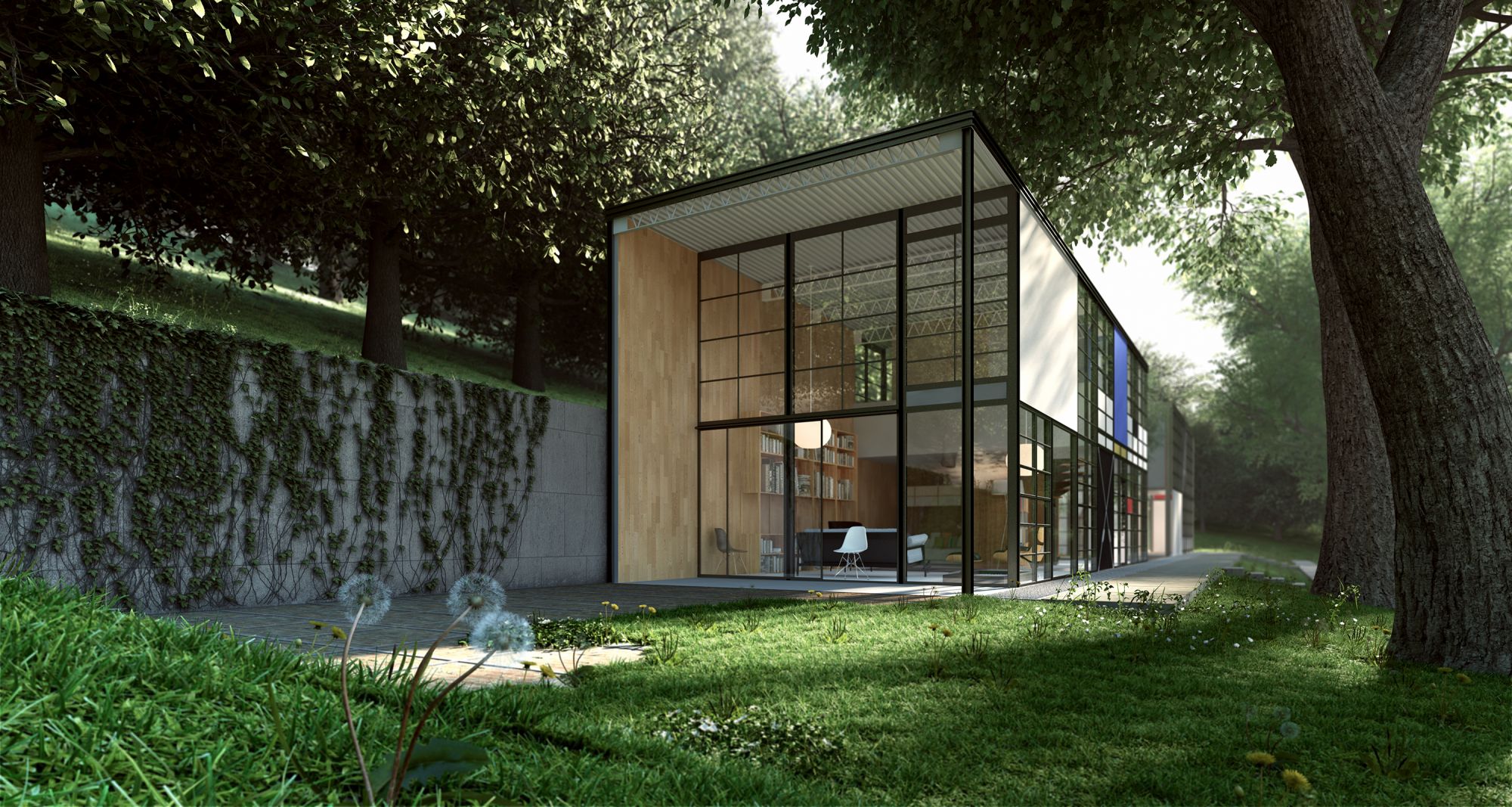
A mezzanine level was added, making use of a prefabricated spiral stair that was to have been the lower entrance. The 17 foot (5.1 m) tall facade is broken down into a rigidly geometric, almost Mondrianesque composition of brightly colored panels between thin steel columns and braces, painted black. An existing row of eucalyptus trees was preserved along the exposed wall of the house, providing some shading and a visual contrast with the house's bold facade. As for the interior design, the Eameses' collection includes, among others, Isamu Noguchi floor lamps, Japanese kokeshi dolls, Chinese lacquered pillows, a Native American basket full of woven grass stems. The Eames House (also known as Case Study House No. 8) is a landmark of mid-20th century modern architecture located at 203 North Chautauqua Boulevard in the Pacific Palisades neighborhood of Los Angeles. It was constructed in 1949, by husband-and-wife design pioneers Charles and Ray Eames, to serve as their home and studio.
The Eames House had a large impact on interior design as a concept and is overall very inspirational to architects and interior designers alike. Charles and Ray Eames were pioneers of combining human-centered design with warmth and comfort to create a perfect living and working space for them, their family, and guests. John Entenza had the 5 acre clifftop meadow and decided to sell the Eames’ a plot and also have Charles Eames and Eero Saarinen design him a small home next door.
Between the steel frames are a variety of transparent and solid-colored panels that are made from glass, fiberglass-like “pylon”, asbestos, plywood, and plaster. These panels were arranged specifically according to the changing sunlight inside the house throughout the day. Charles strongly believed in the architectural design principles of Frank Lloyd Wright, which unfortunately resulted in him being expelled from Washington University’s architecture program. In terms of his architecture career, he designed three houses in St. Louis as well as two churches in Arkansas without an architecture license. The iconic Eames House, or Case Study House #8, is a must see for any fan of modern architecture.
Unusually for such an avant-garde design, the Eames publicized the house as a thoroughly lived-in, usable, and well-loved home. SAH Archipedia tells the story of the United States through its buildings, landscapes, and cities. This freely available resource empowers the public with authoritative knowledge that deepens their understanding and appreciation of the built environment. The current building was initially designed as the “Bridge House” by Charles Eames and Eero Saarinen. Early sketches were published in the Arts & Architecture magazine in 1945, however war-related shortages delayed construction.
There, as at Eames’ House, the architecture alternated between the role of sculptural object, floating in the landscape, and frame for the view of the landscape itself. Privacy was a third concern, and one that trailed so badly that Johnson ultimately moved from the house in order to live in the guest house—the constant sense of exhibitionism imposed by the glass walls had begun to rattle his nerves. Eames’ film was so successful in setting the tone for the interpretation of the house that it still dominates readings today. Everything about the film conceals the structure, and focuses on the circulating collection of tchotchkes and keepsakes, flashes of detail rather than spatial relations. Perhaps even more significant is the way that the Eames’ exploit the paradoxical capacity of still photography to capture transience. As well as textures, they sought out shadows, the temporary play of light through leaves, and reflections on polished glass.
The lines were blurred between their living and working life, and as such their guests were usually the happy guinea pigs of their new inventions. Originally, the house was baptized the “Bridge House” and designs were published by Charles Eames and fellow architect Eero Saarinen. In 2004, Charles’s daughter, Lucia Eames, created a non-profit organization called the Eames Foundation to preserve and protect the Eames House and provide educational experiences that celebrate the creative legacy of Charles and Ray. The Eames Foundation was founded in 2004 to preserve and protect the Eames House as it faced several conservation challenges. In 2012, after consulting with a number of experts, the Foundation partnered with the Conservation Institute to create a long-term conservation strategy.


No comments:
Post a Comment